Exterior work is a different specification, not just the same floor moved outside. Three constraints drive everything:
- UV. Epoxy is not a UV-stable topcoat. Outdoors it will chalk and amber within a season. Exterior work gets an aliphatic polyaspartic or polyurethane topcoat.
- Surface temperature. Dark colours on a pool deck in July are genuinely unusable barefoot. Colour choice is a comfort decision here, not an aesthetic one.
- Slip resistance. Wet feet on a smooth surface next to water is the worst case. Quartz broadcast or an aggressive grit topcoat is standard.
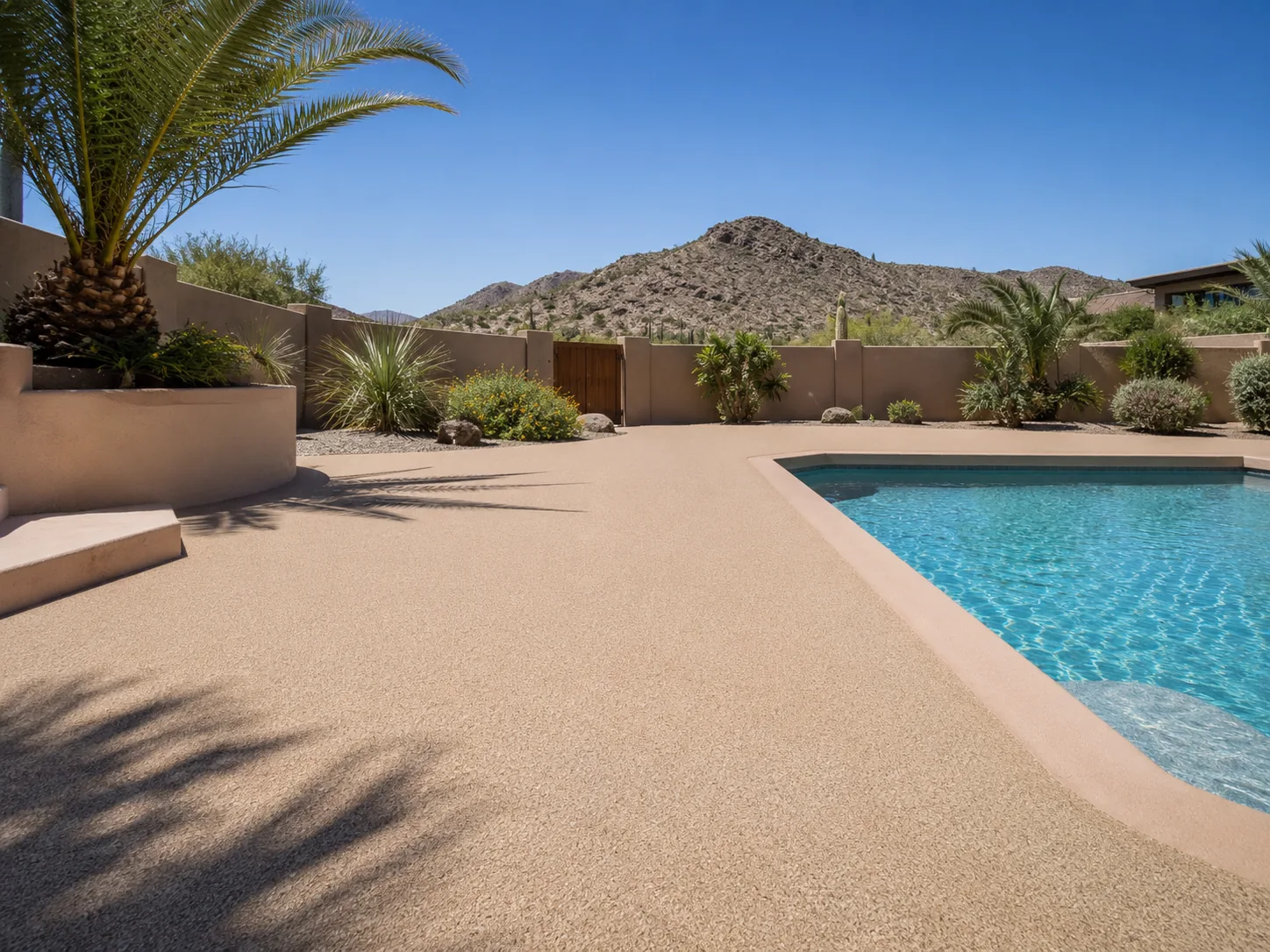
Cool-deck options
Light tans, sand tones and creams in a textured quartz system run meaningfully cooler than a dark smooth surface. There are also topcoats formulated specifically to reduce heat absorption. For a deck that takes full afternoon sun — which is most of them in this valley — we'd spec both.
Existing surfaces
A lot of Henderson pool decks are stamped concrete or old Kool Deck that has worn through. Both can usually be resurfaced rather than removed, provided the substrate is sound. Delaminating Kool Deck has to come off first, which is a real cost and worth knowing before you plan.
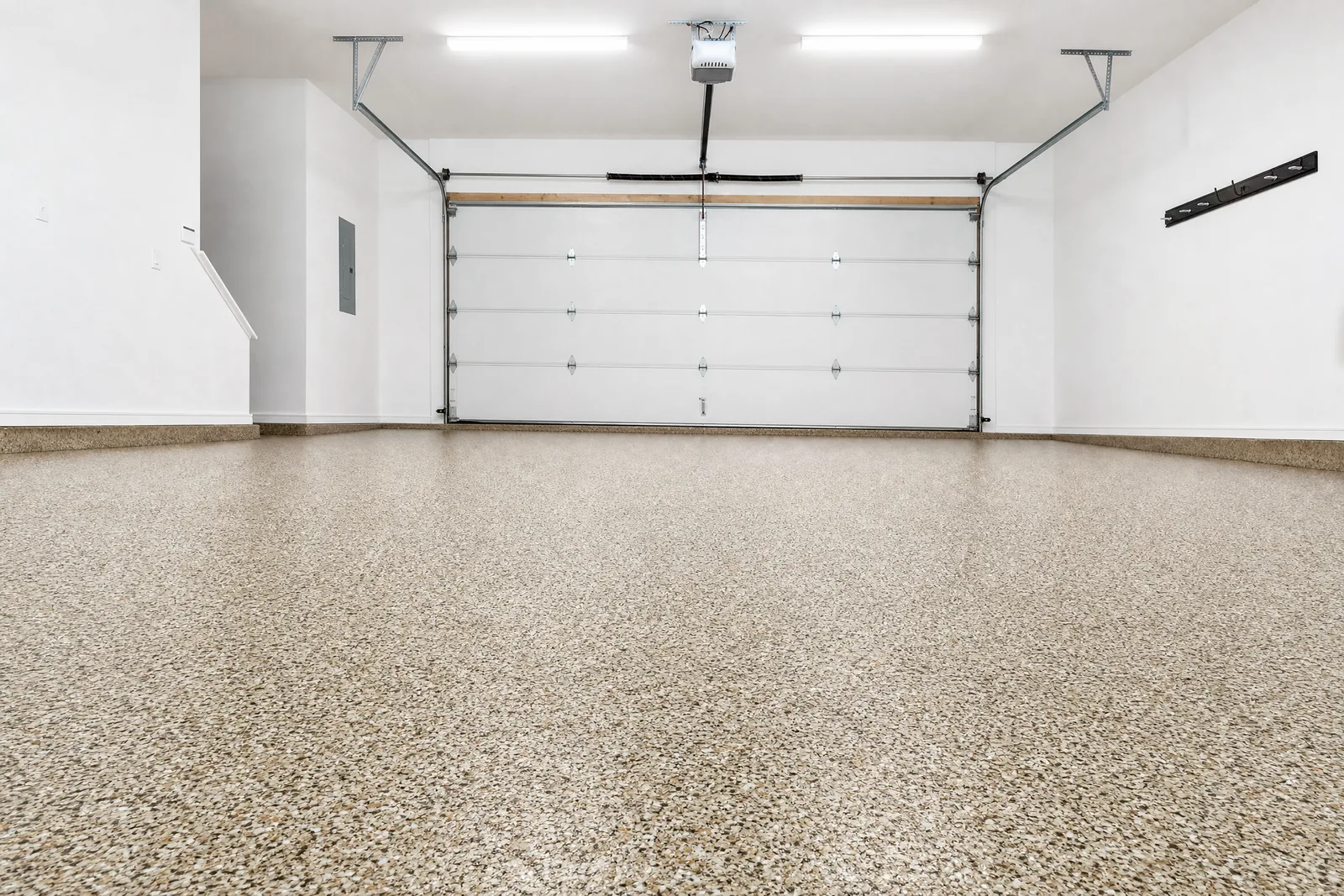
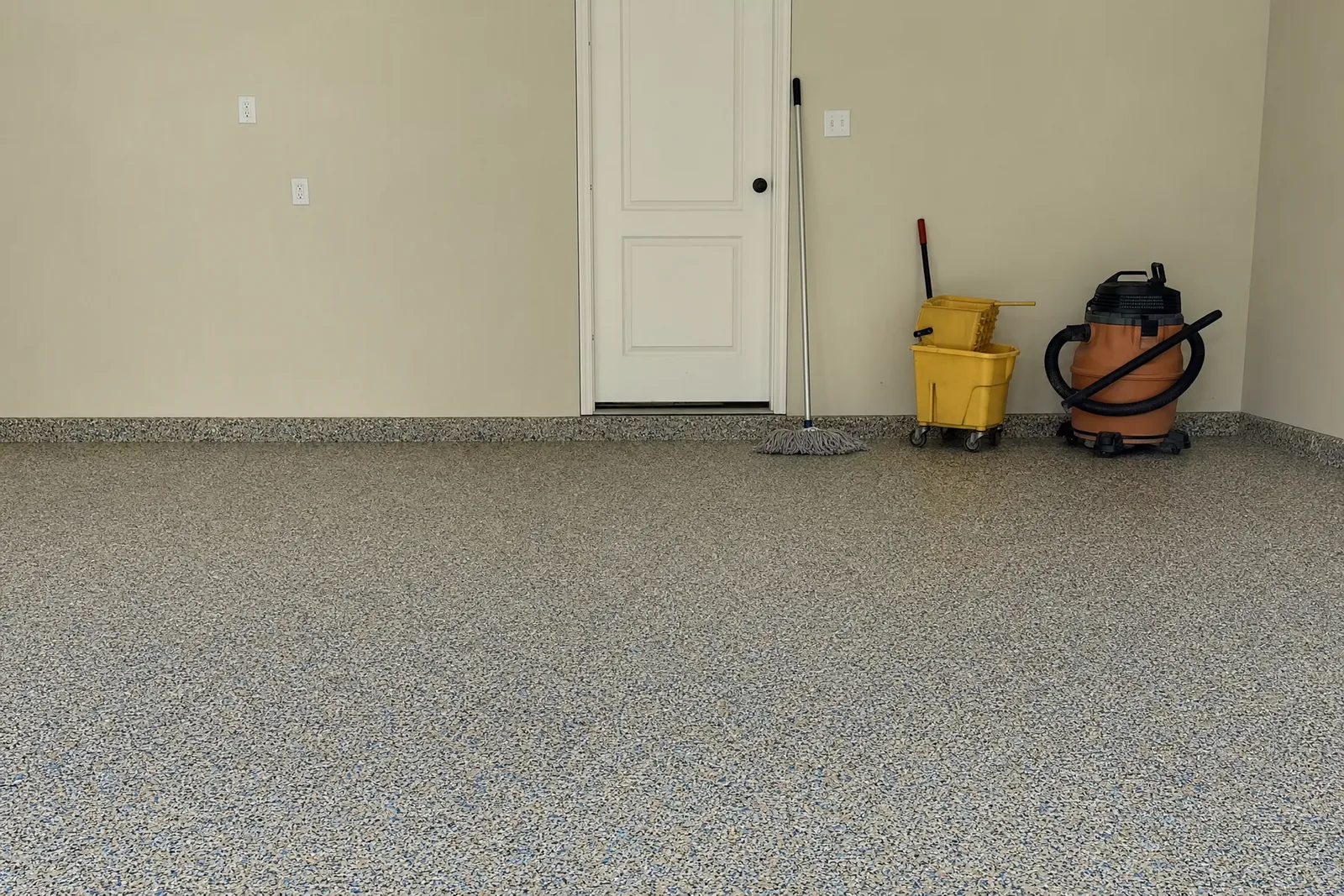
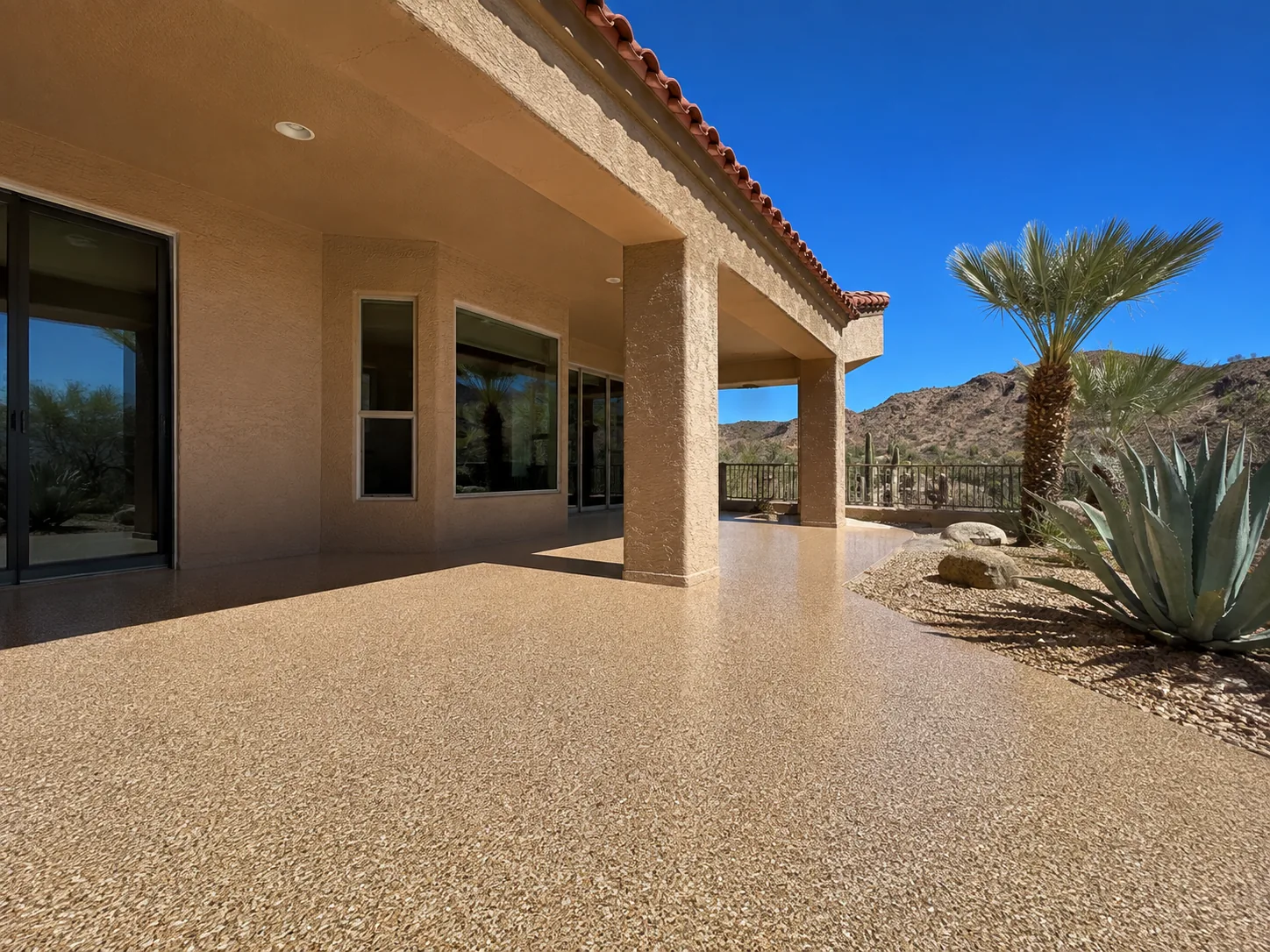
Surface temperature by colour
This is the decision that determines whether the deck gets used. Direct sun on a Henderson July afternoon puts enormous heat into any horizontal surface, and colour is the main lever you control.
| Surface | Relative heat | Barefoot in July |
|---|---|---|
| Light tan textured quartz | Coolest | Comfortable |
| Cream or sand solid | Cool | Comfortable |
| Mid grey | Warm | Tolerable briefly |
| Dark grey or charcoal | Hot | Not usable |
| Black or dark metallic | Hottest | Genuinely unsafe |
Texture helps too, independent of colour — a textured surface has less contact area with the sole of your foot and sheds heat faster. A light textured quartz deck is the coolest practical option available.
Expansion joints outdoors
Exterior slabs move considerably more than interior ones, because they see the full daily temperature swing. A patio that is 75°F at dawn and 140°F at surface by mid-afternoon expands and contracts measurably every single day.
Expansion joints exist to absorb that movement, and they must be honoured through the coating rather than filled and coated over. A flexible sealant in the joint, with the coating terminating cleanly at each side, is the correct detail. Coating straight across an expansion joint guarantees a crack along that line within a season.
Resurfacing existing decks
Most Henderson pool decks are one of three things, and each behaves differently:
- Kool Deck or similar acrylic topping. If it is sound, it can be prepared and coated. If it is delaminating — hollow-sounding, lifting at edges — it must come off entirely, and that removal is a real cost.
- Stamped concrete. Usually coats well. The texture carries through and a coating is often the most economical way to restore colour that has worn off traffic paths.
- Plain broom-finish concrete. The easiest case. Grind, repair, coat.
Drainage first
Before any exterior coating, water has to go somewhere. A deck that ponds after rain will pond after coating, and standing water sitting on any coating for days at a time is hard on it — particularly at the edges of the puddle where the wet-dry cycle concentrates.
If your deck has a low spot, address it before coating. Sometimes that means a levelling mortar; occasionally it means accepting that a section should be replaced. Either way it is cheaper to know before than after.
Common questions
Will a coated pool deck get too hot?
Colour and texture decide it. A light tan textured quartz surface is comfortable barefoot in most conditions here; a dark smooth coating is not, and no topcoat fully fixes that.
If your deck faces west with no shade, go as light as you can live with. It's the single biggest lever you have.
How does it handle pool chemicals?
An aliphatic topcoat handles chlorinated water, salt systems and normal shock chemistry without issue. Splash-out is routine and the surface is designed for it.
What we'd avoid is letting undiluted chemicals sit on the surface — concentrated shock left in a puddle can mark almost any coating.
Ready for a floor that survives a Henderson summer?
Free on-site measure, honest assessment of your slab, and a written quote you can hold us to.